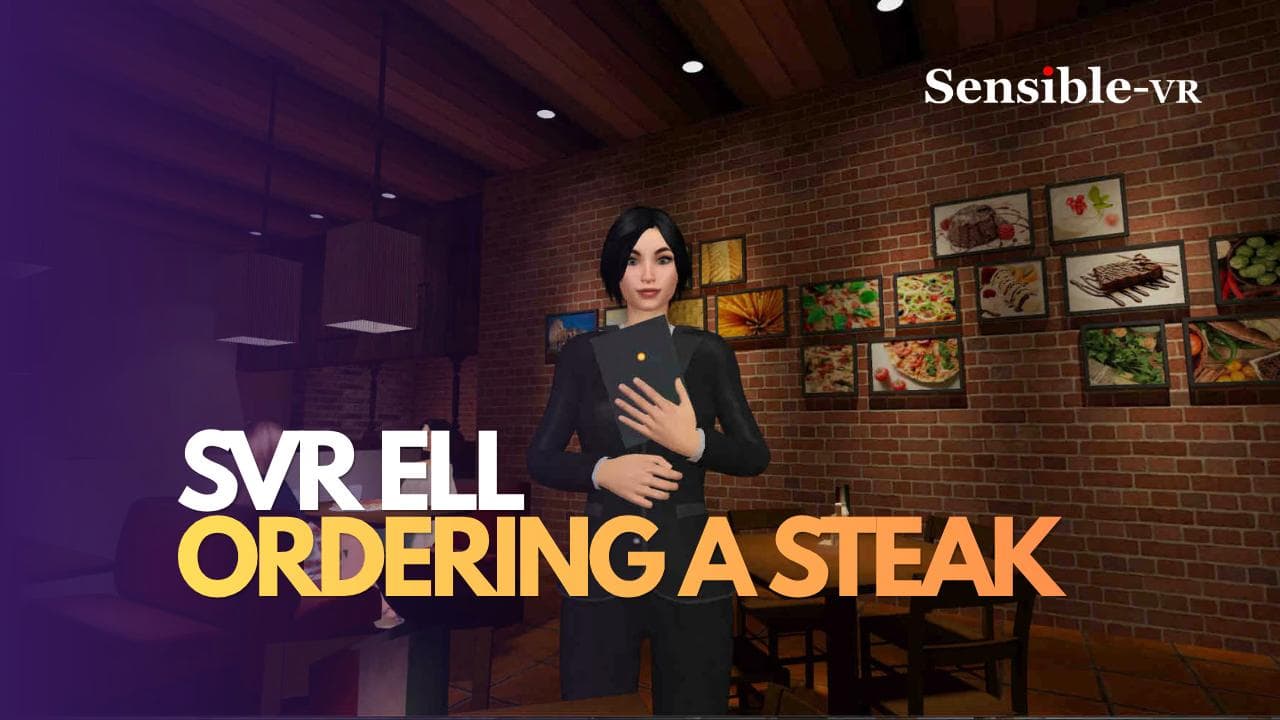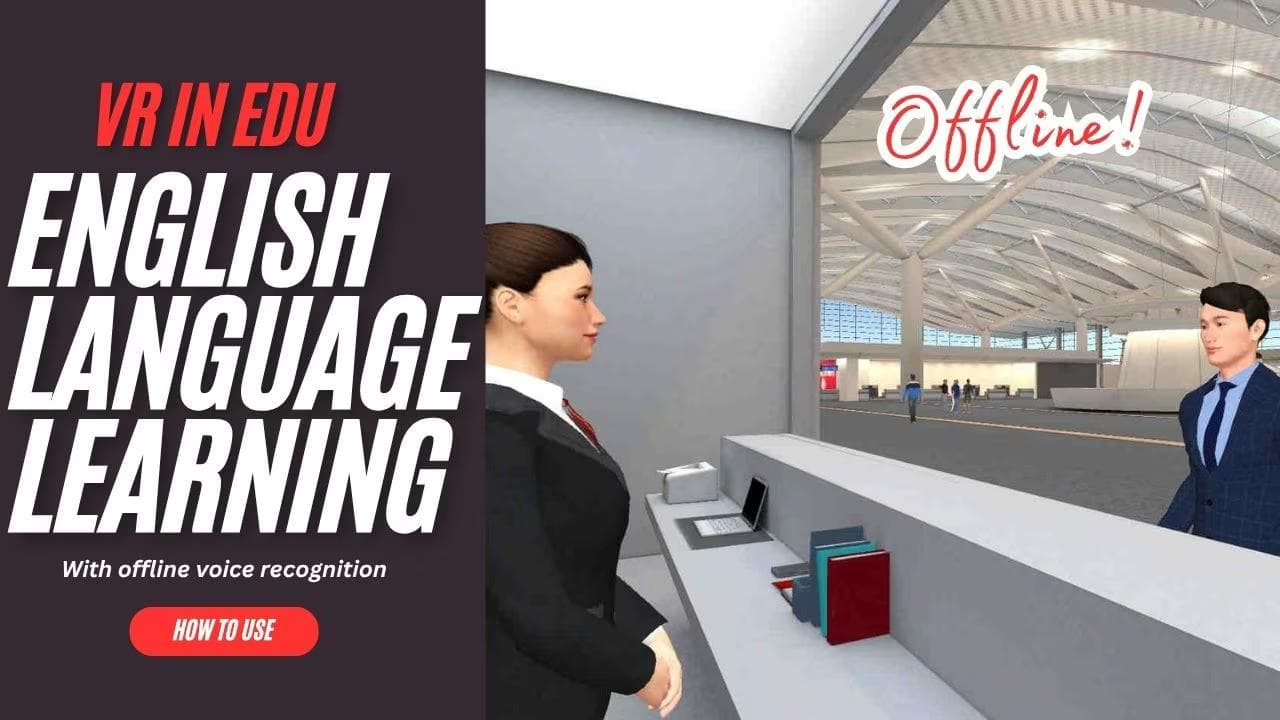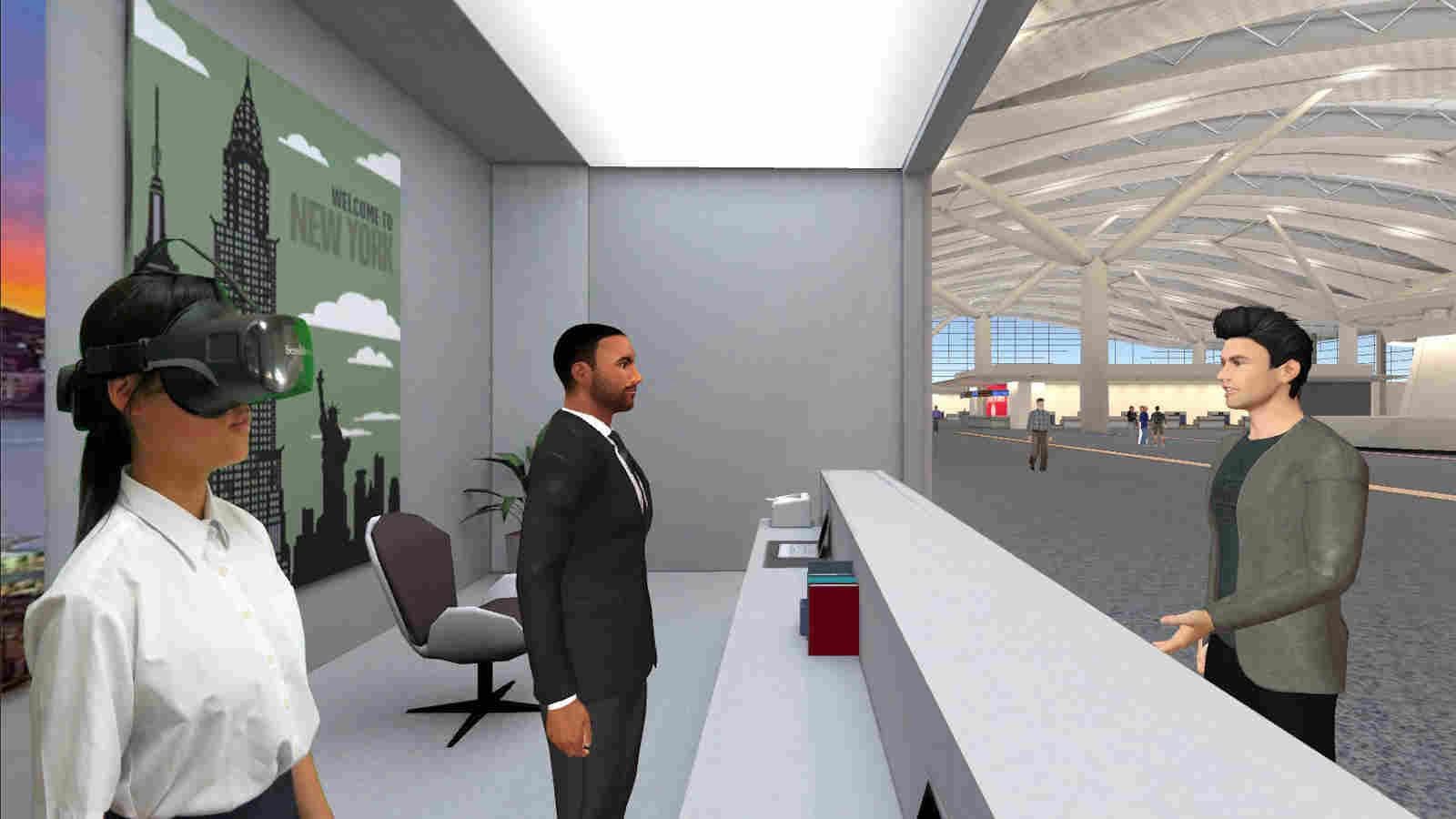
Fear of making mistakes, embarrassment and the feeling of being judged can all stand between knowing a language and actually using it.
Recent research suggests that virtual reality may help close that gap. But it also raises an important question: can VR create a safe place to practise while simultaneously collecting enough biometric information to identify the learner?
Encouraging Evidence for Language Learning
A recent systematic review examined randomized controlled trials involving VR and foreign-language learning in K–12 education. The researchers found generally positive results for vocabulary and listening, with the most consistent benefits appearing in long-term retention rather than immediate test scores.
That is promising, but the evidence base remains small. Only six randomized controlled trials met the review’s inclusion criteria. The studies varied considerably in their participants, technology and instructional methods, and every trial raised at least some risk-of-bias concerns. Most were also conducted in East Asia, limiting how confidently the results can be applied to every school and cultural context.
The correct conclusion is not that VR has been proven to transform language learning. It is that the early evidence is encouraging and deserves further investigation.
A second, broader meta-analysis examined 21 experimental and quasi-experimental studies involving 2,503 learners. It found a moderate positive effect on productive language skills—speaking and writing—with an overall effect size of g = 0.538. The results were particularly encouraging for lower-secondary and university learners.
The effect was similar for speaking and writing, but the comparison group mattered. VR performed much better against traditional instruction than it did against other forms of multimedia learning. There was also substantial variation between the studies, the review was not preregistered, and unpublished research was excluded. These factors mean that the average result should be treated as encouraging evidence, not a universal promise.
Design the System Around Speaking
The moderate gains found for speaking point towards an important design opportunity.
If speaking is one of VR’s most promising contributions to language learning, the system should be designed to encourage students to speak frequently—not simply watch, point and click. Offline speech recognition could allow learners to hear a prompt, respond aloud, practise pronunciation and receive immediate feedback without waiting for a teacher or performing in front of classmates.
That may be particularly helpful for students who understand the lesson but lack the confidence to speak in a group. VR can give them a private, judgement-free space in which mistakes become part of the learning process rather than a public performance.
It is not the headset itself that creates the educational value. It is the deliberate combination of immersion, meaningful context, repeated speaking practice and appropriate feedback.
When Practice Becomes Surveillance
There is, however, another side to the evidence.
VR devices can collect far more than conventional learning systems. Head, hand, controller, body and eye movements can potentially become behavioural biometric data. These movements are not necessarily anonymous simply because a student’s name has been removed.
A 2026 study examined VR motion as a form of behavioural authentication. Using controller-position data from only 41 adults performing a ball-throwing task, researchers showed that motion could serve as a user signature. They also demonstrated that artificial “deepfake” motion could imitate a person’s behaviour and potentially attack such an authentication system. Their defence model distinguished real and generated movement with accuracy as high as 99.8%.
That accuracy is striking, but the sample was small and the task was narrow. The results should not be generalized to children, classrooms, every type of movement or real-world attacks. Nevertheless, the study reinforces an important principle: routine movement data can be treated as identity data.
This matters especially in language learning. A student is less likely to experiment, speak freely and risk making mistakes if they believe the system is evaluating every word, gesture and movement. Once practice begins to feel like surveillance, VR may undermine the confidence it was supposed to build.
Schools must therefore distinguish between data that serves a clear learning purpose and data collected simply because the device is capable of collecting it.
The Sensible Approach
Language learning is one of the strongest educational cases for VR. It can place learners in meaningful situations, give context to vocabulary and provide a private space for repeated speaking practice. A system that leans heavily on offline speech recognition could make those benefits even more valuable.
But that does not justify collecting every available data point.
Speech recognition should help the learner practise. It does not need to create a permanent voice profile. Movement can enable navigation without becoming an identity record. Progress can be supported without transmitting sensitive student information to outside platforms.
The emerging evidence supports both optimism and restraint. VR may help students find their voice—but only if they feel safe enough to use it.
Source
Sun and Song, “The Effectiveness of Virtual Reality for K–12 Foreign Language Learning: A Systematic Review of Recent Randomized Controlled Trials”, Frontiers in Psychology, January 6, 2026.
Şimşek et al., “The Effect of Virtual Reality Applications on the Development of Productive Language Skills: A Meta-Analysis”, Frontiers in Education, April 22, 2026.
Li, Banerjee and Banerjee, “Real or Fake Motion: Protecting Virtual Reality Behavioural Authentication Systems Against Motion Forecasting Attacks”, Frontiers in Virtual Reality, May 18, 2026.