I thought VR’s value was engagement: a novel way to activate the mind, make a difficult idea feel more understandable, and perhaps get learners more interested in STEM.
That was not an unreasonable place to begin.
I joined a large team to build STEM learning modules for students everywhere. It was a good idea, carried out with good intent by many talented people. Writers, developers, artists, curriculum specialists, teachers, and subject matter experts worked hard to make content that was curriculum-aligned, pedagogically sound, and useful.
We built experiences around complex concepts. We included assessment inside the environment. We tried, wherever possible, to make the system work offline. We wanted to connect learners with STEM in a practical, skills-based way.
And we did.
But by 2018, I had learned that we had missed the point in two very basic ways.
Lesson one: the problem was not getting content onto a headset
Making good VR content was expensive. It took time, expertise, care, and a great many people. That is one reason it was so difficult to find meaningful educational VR content a decade ago.
But content could be made. We proved that.
We had a simple headset and controller, and our content could also run on other devices. At the time, that seemed like flexibility. It was the Netflix mindset: get a screen, and we will give you plenty to watch.
But that was exactly where the problem began.
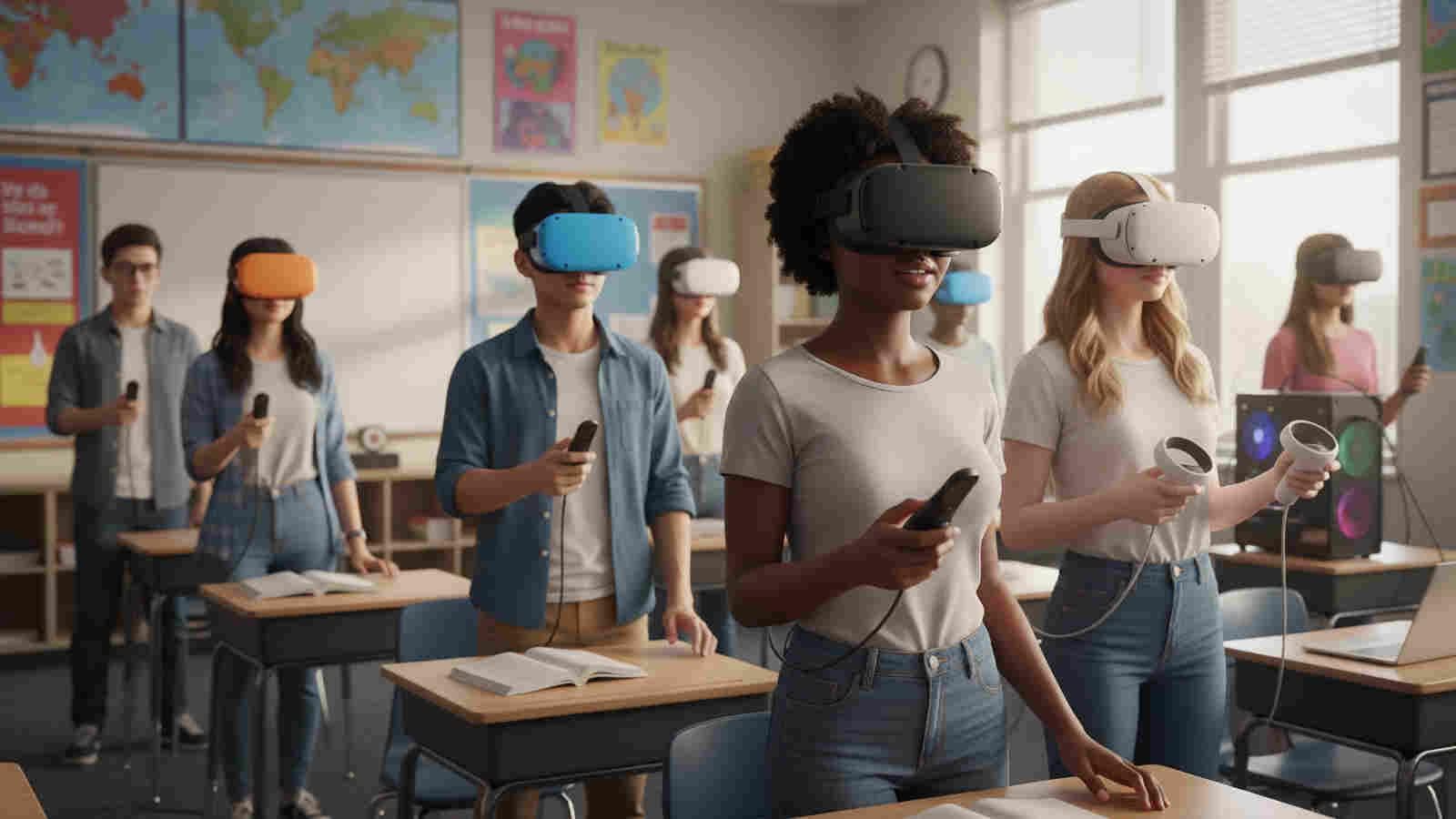
Having an experience run on a headset was never the same thing as making that headset suitable for a school. It could look fantastic. It could be technically impressive. It could have beautiful content.
And still be a poor fit for education.
The real questions were not:
- Can this content run on the device?
- Does it look good?
- Does it have enough features?
The real questions should have been:
- Can an ordinary teacher use it without becoming technical support?
- Can it work reliably in an ordinary classroom?
- Can students use it safely and independently?
- Does it require constant Wi-Fi, accounts, updates, configuration, or supervision?
- Does its design help learning—or create new distractions and burdens?
I had not properly considered that a device designed for gaming and entertainment might be the central obstacle. I thought a square-shaped peg could be made to fit into the school-shaped hole if we simply made the content good enough.
It could not.
I learned a difficult lesson in 2018-19: I could make content for almost any device, but if the device itself was not designed for education, I could not solve that problem with content.
That was insight number one.
Lesson two: VR was not mainly about STEM skills
The second lesson was more surprising.
I had approached VR as a way to teach content and skills. STEM was a natural fit: complex systems, places too dangerous or expensive to visit, abstract concepts that could be made visible, and practical learning through simulation.
All of that remains true.
But VR in education became much more than that.
Nir Eyal defines distraction as an action that pulls us away from what we intend to do. In a world designed to fragment attention, a well-designed VR experience can give a learner something unusually valuable: a quiet place to focus. (Check out Nir Eyal’s book, Indistractable)
The headset is not valuable simply because it is immersive. It is valuable because, for a short time, it can remove the noise.
- No notifications.
- No classroom glances.
- No open tabs
- No pressure to perform for others.
A learner can focus on the task at hand.
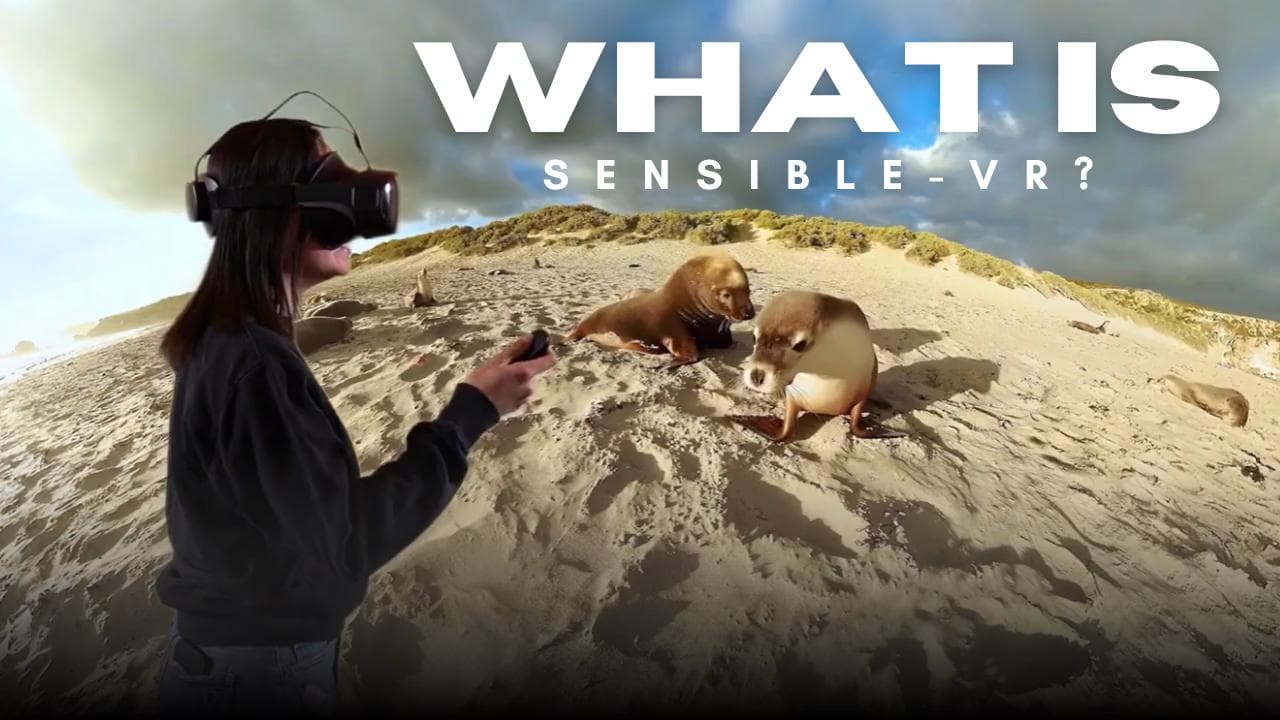
And then I began to hear something I had not expected, especially from teenage girls in several countries: they appreciated being able to learn without being watched.
They did not always use the language of “psychological safety” or “the observer effect.” They simply said they liked being able to learn in peace.
That stayed with me.
Jonathan Haidt’s work has helped focus public attention on the pressures many young people—particularly girls—experience in a phone-based, socially evaluative world. His broader causal interpretation remains debated by researchers, but the underlying concern about attention, comparison, and adolescent anxiety is serious enough that schools should take it seriously. (Check out Jonathan Haidt’s book, The Anxious Generation)
For some students, VR offers a rare judgement-free learning space. Not isolated from learning. Not hidden from it. Protected within it.
What a gift that can be.
What I would apologize for
I would apologize for helping to promote an incomplete idea of educational VR.
A decade ago, I believed that class-wide use of the highest-specification devices, mainly for skills-based learning, was a great idea. We were not wrong about the potential of VR. But I did not understand enough about the practical realities of schools.
I did not yet understand that complexity has a cost.
- Multiple gaming controllers with many buttons.
- Front-facing cameras that can bring distraction into the experience.
- Tracking that may make learners feel observed rather than free to make mistakes.
- Large movement requirements in classrooms full of students.
- Accounts, Wi-Fi, updates, content management, technical support, and supervision.
Any one of these may be manageable. Together, they can turn a promising learning tool into another burden placed on teachers and schools.
More technology is not always more educational.
Sometimes it is simply more to manage.
Content breadth matters, too
I also learned that a library focused only on one area, whether STEM, careers, or any other single category, is not enough.
A school does not make a capital investment so that one small group of students can benefit occasionally. It needs broad, dependable use across subjects, ages, and learning needs.
Schools are willing to spend when there is genuine usage and better learning outcomes. But they rightly ask whether the system can serve enough learners, often enough, to justify the investment.
That means educational VR needs breadth as well as quality. Science, environmental learning, financial literacy, technology, language learning, careers, wellbeing, and more. It needs to be useful across the school day, not merely impressive during a demonstration.
The goal is not to create a spectacular VR moment.
The goal is to make meaningful learning repeatable.
What ten years have taught me
In 2016, we were still guessing about the full learning potential of VR. Today, the research base is much stronger. Across many contexts, immersive VR has shown potential to improve learning outcomes, especially where presence, visualization, practice, and contextual learning matter. But the evidence also makes one point clear: outcomes depend on design, implementation, and fit—not on novelty alone. (Radianti et al., systematic review, link below)
There is efficacy. But we need the right tools to achieve it.
Today, I understand VR differently.
- It is not primarily about the most powerful device.
- It is not primarily about the most elaborate controller.
- It is not primarily about turning every learner into a gamer.
- And it is not limited to a single subject area.
VR offers something uniquely personal: a learner, a focused environment, and the freedom to engage without distraction or judgement.
If we simplify the technology, expand the content coverage, protect privacy, reduce dependence on supervision, and design for ordinary teachers rather than technical champions, the benefits can reach far more students.
That also makes the experience more affordable for schools anywhere—and gives them the kind of return on investment they should expect.
In 2016, the thinking was not wrong.
But the understanding was not enough.
Lesson learned.
Sources
- Eyal, N. (2019). Indistractable: How to Control Your Attention and Choose Your Life.
- Haidt, J. (2024). The Anxious Generation.
- Odgers, C. L. (2024). The great rewiring: is social media really behind an epidemic of teenage mental illness? Nature.
- Radianti, J. et al. (2020). A systematic review of immersive virtual reality applications for higher education. Computers & Education.