The technology that changed classrooms did not win by being exciting. It won by becoming useful.
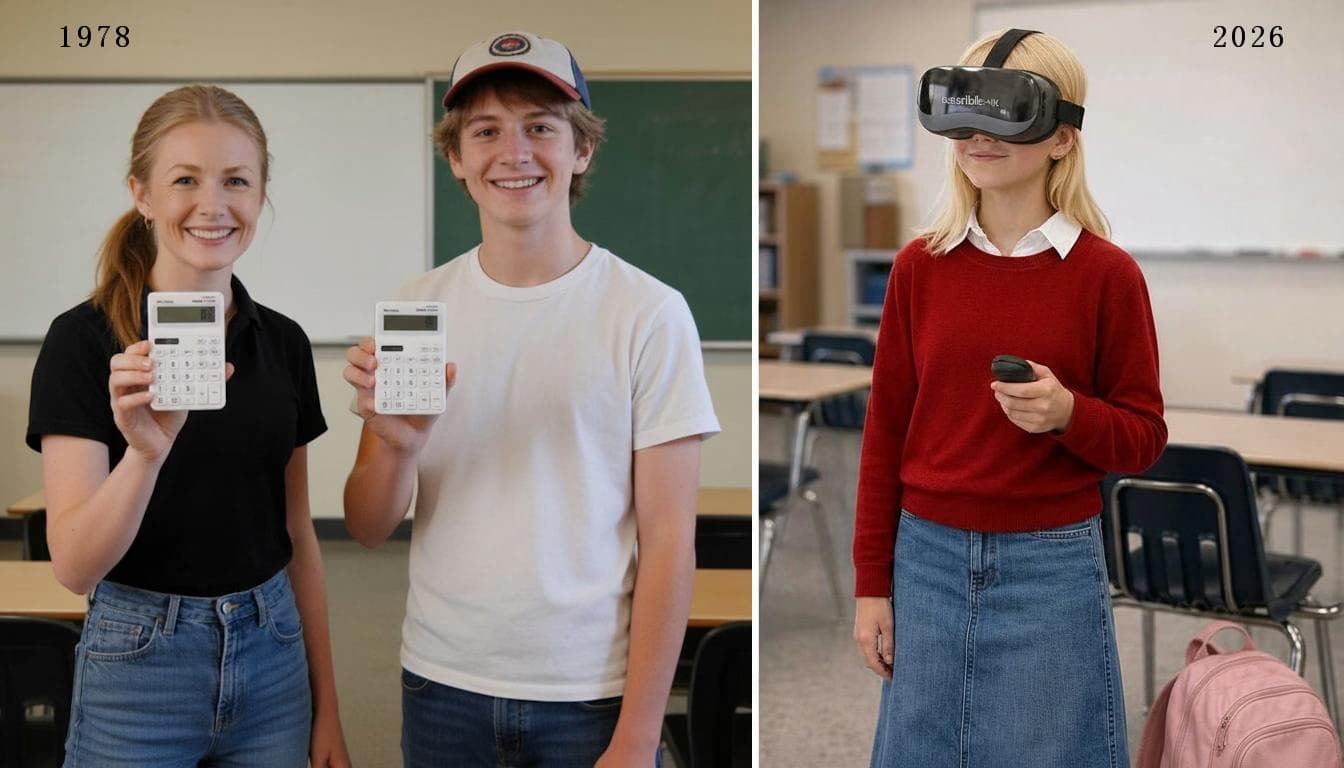
In 1978, the calculator was apparently preparing to destroy education.
Teachers worried that students would stop understanding numbers. Parents feared dependency. Some people were convinced that if a machine did the arithmetic, young minds would immediately turn to porridge.
That did not happen.
The calculator reduced anxiety. It saved time. It allowed students to spend less effort on repetitive calculation and more effort on understanding the problem. It proved its value, settled into the classroom and eventually became infrastructure.
Nobody schedules a professional-development day for the calculator. Nobody hires a facilitator to supervise it. Nobody asks the IT department to update 30 calculators before Tuesday morning. The teacher takes it out when it is useful, and puts it away when it is not.
Now Along Comes VR
Virtual reality has arrived with its own collection of worries: short hardware lifespans, expensive systems, complicated training, constant updates, supervision, subscriptions and hidden costs.
Are those concerns valid? Absolutely. If VR is done the wrong way, there will likely be problems.
Buy a consumer gaming device, bolt on several services, require permanent internet access, train teachers to become part-time technicians, add an adult facilitator and replace the hardware every few years. You can certainly make VR expensive. With enough determination, we can make a pencil expensive, too.
The Cost Is Not the Headset
Schools are often shown the purchase price and told that this is the cost of VR. It is not. The real cost includes everything needed to make the headset usable: setup, accounts, charging, updates, content management, troubleshooting, teacher training, supervision, replacement cycles and the time lost whenever the system refuses to cooperate.
If a car can only be used with a chauffeur, the chauffeur is part of the cost of the car. If a VR system can only be used with a facilitator standing beside it, that person is part of the cost of VR.
Teacher time is not free simply because it does not appear on the invoice.
A Sensible System Changes the Equation
Sensible-VR starts with a different question: what must be removed so that VR can become an ordinary classroom tool?
Remove the unnecessary complexity. Remove the dependence on social-media platforms. Remove the need for constant connectivity. Remove the cameras and tracking that do not serve the learning objective. Remove the professional-development burden. Remove the facilitator wherever safe, focused, independent use is possible.
What remains is the part schools actually wanted in the first place: focused learning.
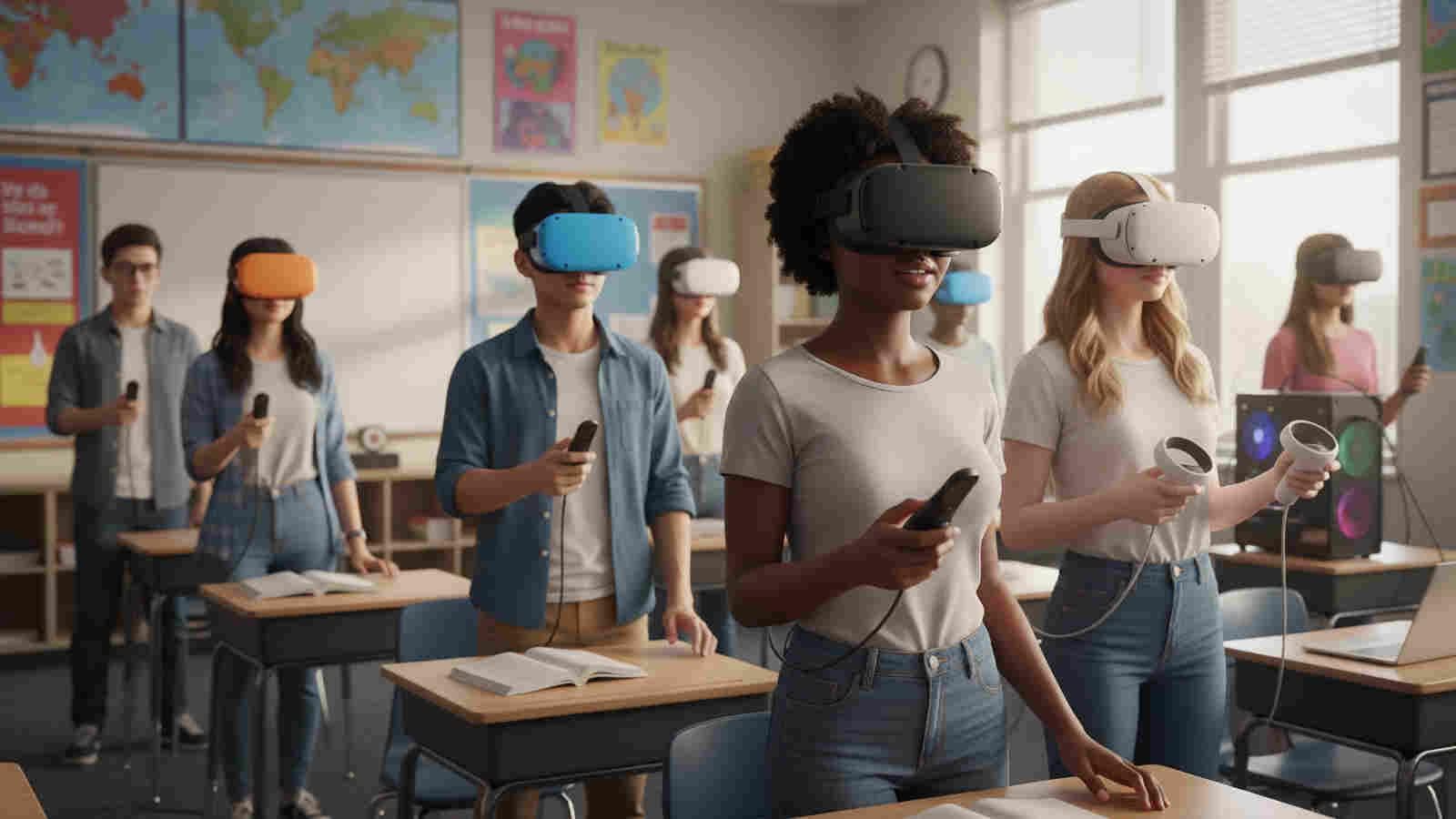
Students can enter a place, examine a process, rehearse a situation or understand a difficult idea without the usual classroom distractions competing for their attention. They use VR briefly and deliberately, then return to the lesson with better context. Attention is the currency of VR.
Return on Attention
ROI normally means return on investment. In education, it should also mean return on attention.
A headset sitting in a cupboard has no ROI. A headset that takes 20 minutes to prepare for a 10-minute lesson has a rather creative relationship with ROI. A headset that needs a specialist every time it is switched on is not infrastructure. It is an event.
A sensible VR system is different. It is ready when the teacher needs it. Students can use it independently. The content is controlled. Costs are predictable. The hardware is chosen for longevity, not for the latest gaming feature. The system earns its place by being used regularly, not by looking impressive during a demonstration.
That is how the return can exceed that of the mighty calculator. A calculator saves time and reduces anxiety. Well-designed VR can do those things while also capturing attention, creating context and helping a student understand something that is difficult to explain on a flat page.
Boring Is a Feature
Education technology companies like words such as revolutionary, disruptive and transformative. Schools generally prefer another word: reliable.
The tools that last in classrooms eventually become boring. That is not an insult. It is the goal. Boring means the teacher is no longer thinking about the technology. Boring means the student is focused on the lesson. Boring means nobody from IT has been summoned.
The calculator did not become essential because it demanded attention. It became essential because it quietly did its job. VR can follow the same path, but only if we
stop treating it as a spectacle, a gaming platform or a miniature computer lab strapped to a learner’s face.
The Real Test
The question is not whether VR is impressive. Of course it is. The question is whether it still works on an ordinary Wednesday morning, with an ordinary teacher, in an ordinary classroom, without adding stress.
If it does, it can become infrastructure.
Simple. Reliable. Daily.
Sensible-VR.
Summary
Calculators earned their place in classrooms by becoming simple, reliable and useful. VR can do the same, but only when training, supervision, tracking and hidden costs are designed out. Sensible-VR turns immersive learning from an event into everyday infrastructure.
Watch this video
 00:58
00:58