Back in 2019, while working with Veative, I wrote an article called Pains and Gains: Virtual Reality in a Classroom. In it, I introduced a particularly offensive four-letter word in education.
Just.
It's a favourite word of technology companies. And one that teachers have learned to dread.
- "Just connect the Wi-Fi."
- "Just set up the headsets."
- "Just download the content."
- "Just create the student accounts."
- "Just update the software."
- "Just show the students how to use it."
- "Just call IT if something goes wrong."
Just. Just. Just.
To the technology enthusiast, these are simple instructions. To the teacher, they're another list of jobs that nobody has given them the time, training, or resources to complete.
And that's the problem.
Teachers are teachers. Not IT departments.
For more than 35 years, I've worked in education, and I've watched one technological revolution after another arrive in schools.
Computers. Interactive whiteboards. Tablets. Coding. Robotics. 3D printers. Virtual reality. And now artificial intelligence.
Each arrives with considerable excitement and promises to transform education. And each seems to arrive with a familiar message.
Teachers just need to learn how to use it.
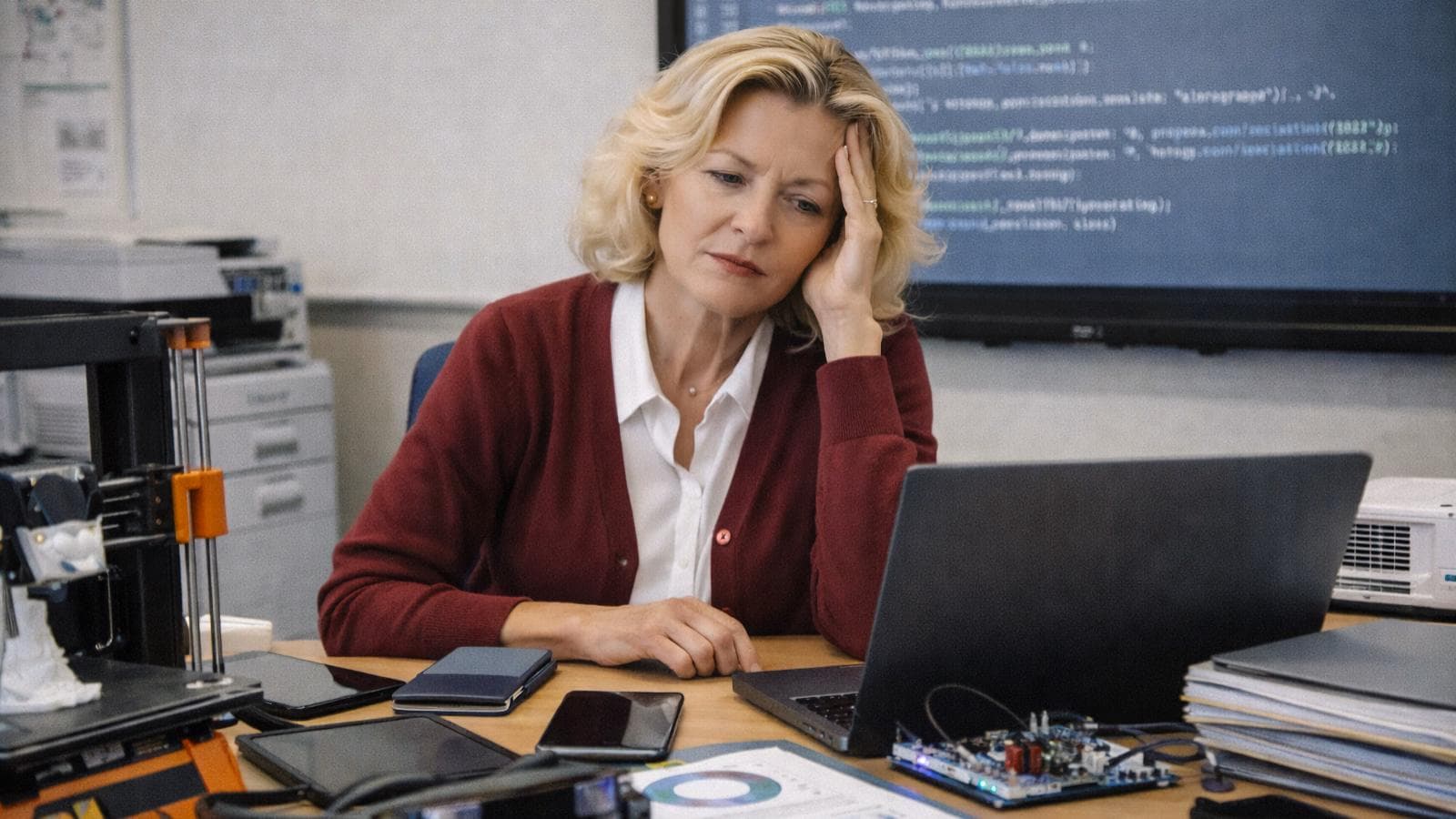
But teachers already have a job. A rather important one. They have lessons to prepare, students to assess, parents to meet, individual learning needs to address, and classrooms to manage.
Now we're asking them to become VR technicians, network administrators, software specialists, and content developers?
It's not that teachers are incapable of learning these things. Of course they are. Many are extraordinarily capable and enthusiastic.
But the ability to do something does not create an obligation to do it.
And a teacher's willingness to spend their personal time learning a new technology should never be a prerequisite for students to benefit from it.
Seven years later, a different perspective
Looking back at that 2019 article, I still agree with the fundamental argument. The concept was, and remains, valid. But the methodology needed some work.
At the time, I argued for keeping the teacher at the centre of VR learning. Make the technology easier for teachers. Give them better tools, better training, and better support so they could confidently deliver VR lessons.
That seemed sensible.
But over the years since, working with educators and institutions in different countries, I've come to recognize something important.
Making it easier for teachers to manage VR is not the same as removing the need for teachers to manage VR.
There's a significant difference.
Certainly, there are times when the teacher should be at the centre of the experience. A teacher-led demonstration, a carefully structured activity, or a specialized lesson may benefit enormously from that approach.
And when a teacher wants to be actively involved, the technology should support them.
But should that be the default?
Should every VR experience require a teacher to organize, manage, facilitate, monitor, and troubleshoot the technology?
Should the success of a school's VR program depend on having one particularly enthusiastic teacher who is willing to invest evenings and weekends learning how everything works?
My experience has convinced me that the answer is no.
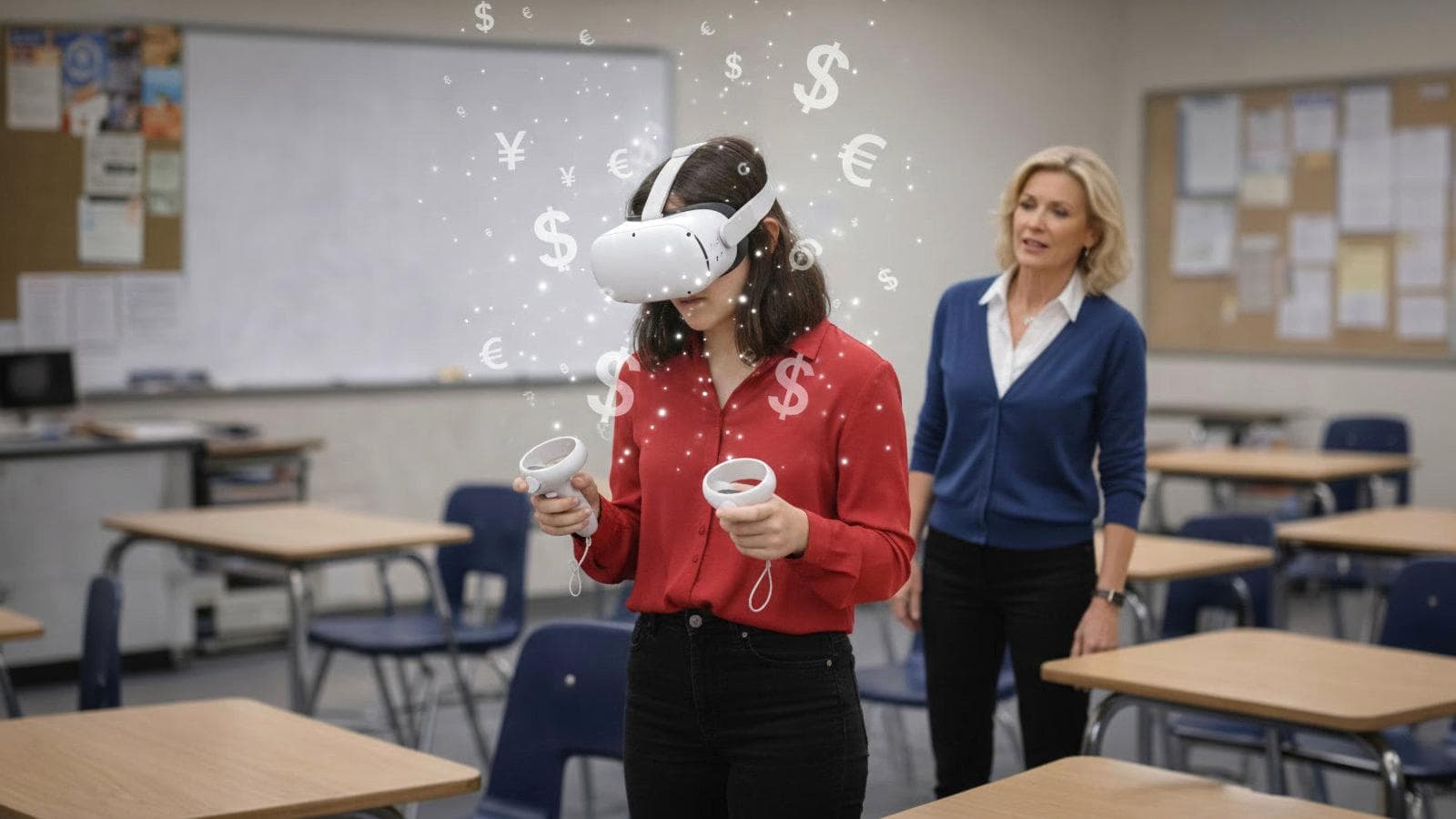
For most everyday learning activities, the teacher doesn't need to be at the centre of operating VR at all. The student does.
And that's a significant change in thinking.
The hidden cost of "just"
There's something else happening whenever a technology company says "just".
A cost is being transferred.
A company may sell a school a VR headset for $500 and celebrate how affordable the technology has become.
But who configures it?
Who installs the applications, manages the accounts, connects it to the network, downloads the experiences, updates the software, supervises the students, troubleshoots the inevitable problems, and prepares everything for the next class?
Someone has to do those things. And someone's time has a cost.
If it's the teacher, we're taking time away from teaching. If it's IT, we're adding another responsibility to an already busy department. If it's an outside specialist, we're paying for expertise.
And if the technology requires a trained facilitator standing beside every student, then we have created another expensive staffing requirement.
The headset has a price. Using it has a cost.
Too often, the technology industry talks endlessly about the first and conveniently ignores the second.
And the word "just" is how those costs get quietly passed along.
Why Sensible-VR took a different approach
When we created Sensible-VR, we decided to challenge the basic assumptions behind how VR is delivered in schools.
Rather than asking how to train teachers to become better VR operators, we asked a different question.
Why do teachers need to operate the VR in the first place?
- What if students could learn independently?
- What if the content were already installed?
- What if the headsets didn't need constant internet connections, complicated accounts, or endless configuration?
- What if the learning experiences already contained the explanations, narration, and assessments?
- What if the technology could be used safely while sitting in a swivel chair or standing in one place, without needing a large cleared classroom or someone constantly watching to make sure students weren't walking into walls?
- And what if the cost of preparing, configuring, and managing the technology was largely absorbed into the system itself, rather than transferred to teachers?
That's what we set out to build.
Sensible-VR is offline-first, with a ready-to-use learning library, simple controls, and short, self-directed experiences.
Students can choose a learning module, follow the lesson, and complete an assessment without needing a teacher to guide them through every step.
For those who want to create, MySense-VR also gives students and teachers the ability to author their own immersive experiences. That is a valuable educational opportunity, building digital literacy, creativity, information organization, and real-world technical judgement.
But content creation is an option, not a requirement for using VR.
And teachers who want to design and lead immersive learning activities absolutely can.
The point is that they shouldn't have to.
Simplicity is our responsibility, not the teacher's
There's a fundamental problem with the way much of the education technology industry approaches usability.
When teachers find technology difficult, the industry's instinct is often to provide more training. More workshops. More tutorials. More professional development. More certification programs.
Sometimes those things have real value.
But if a technology requires substantial training simply to perform its basic function, perhaps the problem isn't with the teacher. Perhaps the problem is with the technology.
- We don't expect teachers to understand how a calculator works internally before students can use one in mathematics.
- We don't require a dedicated technology coordinator to supervise every time a student opens a book.
Why should VR demand so much more?
A technology that requires a particularly enthusiastic teacher, a dedicated IT specialist, several professional development sessions, and a carefully prepared classroom might produce an impressive demonstration.
- But can it become part of everyday education in hundreds of thousands of ordinary schools?
- Can it work in a rural school with unreliable internet?
- Can it work in a school with no dedicated IT department?
- Can it work when the teacher has never attended a VR workshop, has no interest in becoming a VR expert, and simply wants students to learn?
Those are the questions that matter if we genuinely believe VR belongs in schools around the world.
And those are the questions Sensible-VR was designed to answer.
Giving "just" a better meaning
Seven years ago, I wanted technology companies to stop saying "just" to teachers. Today, I think we can do something better.
We can make the technology simple enough that just becomes a perfectly reasonable word again.
- Not "just learn how to configure these 30 headsets".
- Not "just spend your Saturday attending a VR training workshop".
- Not "just reorganize your classroom, prepare the network, download the content, and supervise every movement".
- And certainly not "just ask the IT department", as though they have nothing else to do.
We've spent years designing Sensible-VR to remove those burdens. Not because teachers aren't capable of doing them. But because they have far better things to do.
In fact, I can imagine a perfectly ordinary classroom where a student is ready for an immersive learning experience.
The teacher looks at the student, points to the VR headset sitting on the table, and says three magic words.
"Just be sensible."
The student picks up the headset and starts learning. No special training. No elaborate preparation. No Saturday morning workshop.
Just learning.
And that, I think, is exactly how educational technology should work.