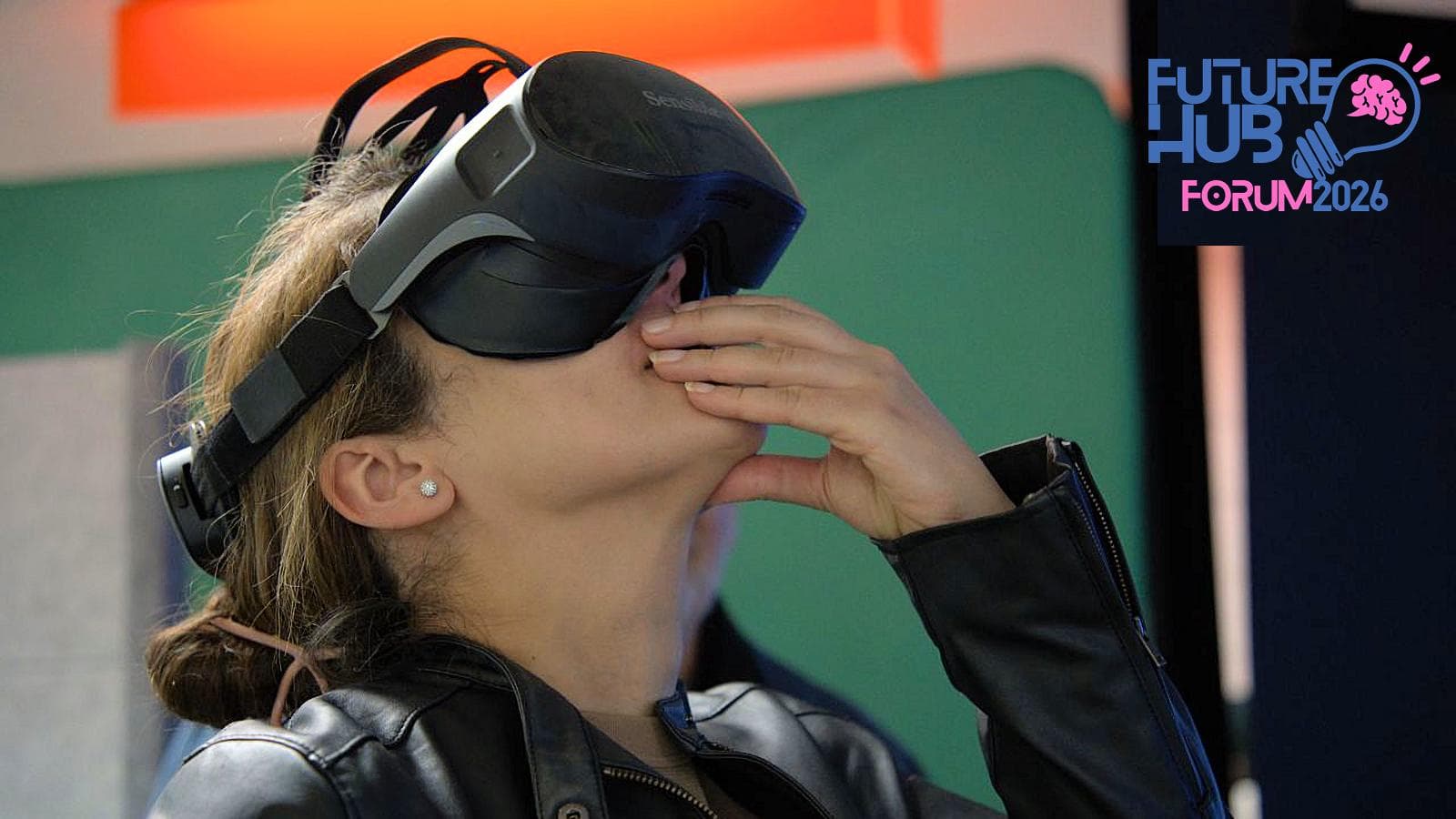
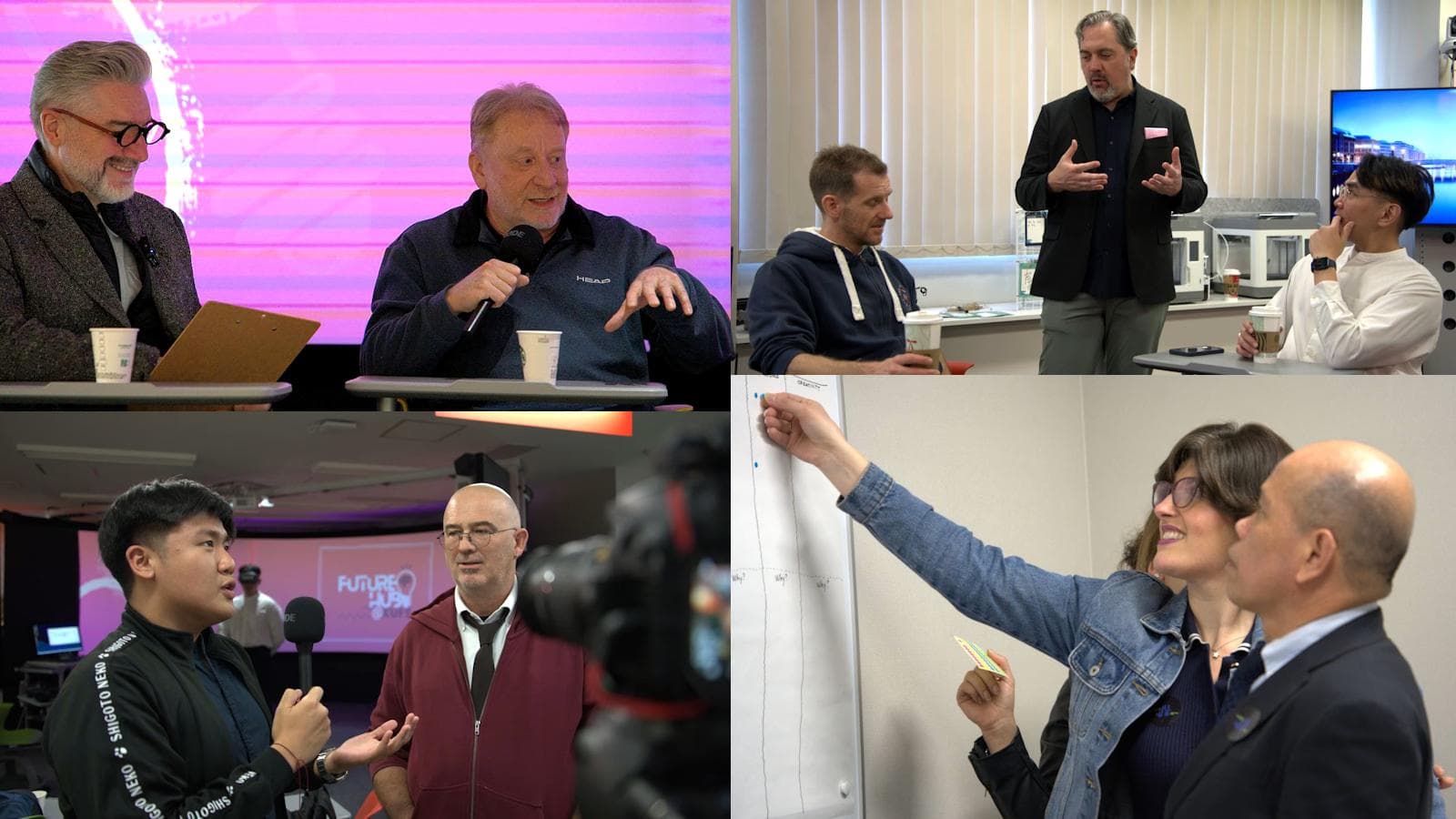
Participants came from universities across Japan, the Philippines, and Indonesia, with others hailing from South Africa, the United States, Canada, Iran, the United Kingdom, New Zealand, and Thailand.
Different countries. Different institutions. Different educational priorities.
But remarkably similar problems.
These were not people unfamiliar with virtual reality. Quite the opposite. These were experts, advocates, researchers, and educators who have dedicated considerable time and effort to understanding what immersive technology can contribute to learning.
They believe in it.
And yet, conversation after conversation returned to the same difficulties.
Cost. Setup. Supervision. Updates. Content. Longevity. Obsolescence.
A few weeks earlier, I had been visiting universities and colleges across Canada, having almost exactly the same conversations.
Different continent. Same challenges.
It left me thinking about something rather uncomfortable.
What if the greatest obstacle to the widespread adoption of VR in education is no longer whether the technology works, but whether the technology we've chosen actually allows it to work at scale?
The Tumbleweed Problem
A fellow Canadian and immersive learning advocate, Craig Frehlich, recently shared a thoughtful reflection about tumbleweeds.
He described houses surrounded by accumulating tumbleweeds, using them as a metaphor for how fear, self-doubt, and avoidance can gradually build barriers that prevent us from moving forward.
His larger point was about learning, resilience, and the importance of creating opportunities to practice, make mistakes, reflect, and grow.
I agree wholeheartedly.
Learning requires repetition. It requires the freedom to make mistakes. It requires the opportunity to try again, ideally without embarrassment, intimidation, or judgement.
VR has an extraordinary ability to create environments where this can happen.
But Craig's analogy prompted another question.
What if some of those tumbleweeds are the barriers we inadvertently build into the learning technology itself?
What if the very systems we purchase to expand educational opportunities are making those opportunities harder to access?
And what if the tumbleweeds keep accumulating, not because educators are resistant to change, but because the technology demands more of them than they can reasonably sustain?
The People Who Are Already Convinced
There is a persistent narrative in educational technology that adoption is difficult because teachers are reluctant to embrace innovation.
Certainly, resistance to change exists.
But that is not what I have been encountering.
The university researchers and educators I've been speaking with are already convinced of VR's potential. Many have conducted research, developed content, established laboratories, and demonstrated meaningful educational outcomes.
They understand immersive learning.
They want more of it.
Yet many are struggling with the practical requirements of delivering it.
A headset needs to be configured. Software needs updating. Content needs maintaining. Accounts may need managing. Students need supervising. Dedicated space may be required. Equipment eventually becomes obsolete.
Each requirement may seem manageable in isolation.
But together, they accumulate.
One tumbleweed at a time.
Eventually, the very people who championed the technology find themselves spending more time maintaining access to learning than actually delivering it.
And when that happens, something is fundamentally wrong.
The Difference Between an Experience and a System
We have become remarkably good at demonstrating what VR can do.
- An immersive simulation can allow a nursing student to rehearse a difficult patient conversation.
- A technical apprentice can explore unfamiliar equipment.
- A student can visit a historical site, examine a scientific process, or experience a situation that would otherwise be inaccessible.
These are valuable opportunities.
But there is an important distinction between creating a remarkable learning experience and creating a sustainable learning system.
An experience might be used once during a demonstration, a research project, or a scheduled laboratory session.
- A system must work again tomorrow.
- And next week.
- And next year.
- Without requiring an expert to be present every time.
- Without consuming unreasonable amounts of teacher time.
- Without depending on constant technical intervention.
- And without becoming obsolete before the institution has recovered the value of its investment.
The true measure of educational technology isn't what it can demonstrate once. It's what it can deliver consistently.
This distinction matters enormously, particularly when we begin talking about repetition and practice.
Practice Requires Access
Craig made an excellent point about resilience and competence.
Confidence is developed through preparation, practice, feedback, and repetition, rather than simply demanding that people perform under pressure.
It is difficult to disagree.
But this raises a practical question.
What happens when the technology designed to enable that practice is difficult to access?
What happens when students can only use VR during a scheduled laboratory session, under supervision, with equipment that requires preparation and technical support? Who accounts for those costs?
How much repetition is realistically possible?
A student may benefit enormously from practicing a difficult conversation in VR.
But surely the opportunity to repeat that experience independently, privately, and as often as necessary has considerable educational value.
The same is true for learning vocabulary, understanding a complex concept, recognizing a dangerous situation, or making decisions under unfamiliar circumstances.
Not every learning objective requires physically manipulating objects in virtual space. Some absolutely do, and systems capable of supporting those activities are important.
But many valuable learning objectives involve understanding, recognition, decision-making, confidence, and focused attention.
These can often be supported with simpler, less demanding technology.
More technological capability does not automatically mean more educational opportunity.
Sometimes the opposite is true.
A more sophisticated system may deliver a richer individual experience while simultaneously reducing how frequently, independently, or affordably that experience can be accessed.
That is a trade-off the education sector needs to examine much more carefully.
Longevity and Obsolescence: The Tumbleweeds Nobody Talks About
Two words came up repeatedly in my recent conversations.
Longevity.
Obsolescence.
These deserve far more attention than they currently receive.
Schools and universities do not operate on the same replacement cycles as consumer electronics.
A university may invest in a VR laboratory with every intention of using it for years. Faculty members are trained. Content is developed. Research is designed around the equipment. Courses begin incorporating the technology.
Then the underlying hardware or software ecosystem changes.
An operating system becomes unsupported. A required application changes. An account system introduces new conditions. A manufacturer redirects its priorities. Hardware is discontinued. Content becomes incompatible.
Suddenly, the institution is faced with a choice.
Invest again, rebuild parts of the system, or gradually stop using it.
And this isn't necessarily because the original equipment has stopped functioning.
It may simply no longer be supported.
[Editorial note: Meta has announced that the author’s Quest 2 VR headset will no longer be supported from December 2027.]
The headset still has a price, but the cost of using it has changed dramatically.
This is especially troubling in education, where public money, faculty time, and institutional resources are often invested with the expectation of long-term value.
A learning system that becomes obsolete before the learning has been fully delivered is not necessarily an innovation. It may be an expensive interruption.
And every interruption adds another tumbleweed.
The Hidden Cost of the Expert
Something else became clear during these conversations.
Many successful VR implementations depend heavily on extraordinarily dedicated individuals.
There is usually someone who understands the headsets, manages the applications, prepares the equipment, troubleshoots problems, and makes everything work.
A passionate teacher. A laboratory technician. A research assistant. An enthusiastic professor.
These people are invaluable.
But their presence can also conceal an uncomfortable reality.
If the technology only works because a knowledgeable individual is constantly supporting it, then that individual's time is part of the cost of the technology.
It cannot simply be ignored.
A system that requires fifteen minutes of a teacher's time to deliver fifteen minutes of student learning carries a very different operational cost from one a student can use independently.
This isn't a criticism of teachers or technical staff. Quite the opposite.
The most expensive part of VR often isn't the headset. It's the person required to make the headset usable.
And the more institutions depend on these champions, the harder it becomes to scale beyond the original project.
What happens when that enthusiastic professor retires, changes institutions, or simply runs out of time?
Does the VR program continue?
Or does it quietly become another piece of equipment gathering dust?
What If We Designed for Education First?
Perhaps we need to reconsider the questions we ask when evaluating VR for education.
Instead of beginning with:
How immersive is it? How realistic is it? How sophisticated is the interaction?
We might begin with:
- Can students use it independently?
- Can it be used repeatedly throughout an ordinary school day?
- Does it require dedicated space or continuous supervision?
- Can it operate without a dependable internet connection?
- Can institutions protect learner privacy?
- Can content be maintained and updated affordably?
- Will it remain useful five years from now?
- What is the actual cost of delivering each learning experience, including teacher and technical support?
And, critically:
Is this the simplest effective technology for the learning objective?
This is not an argument against sophisticated VR.
There are tasks, particularly those involving physical coordination and fine motor skills, for which six degrees of freedom (6 DoF) and interactive manipulation are essential.
Surgical procedures, welding, and other physically demanding skills are obvious examples.
But not every learning objective requires these capabilities.
We should be selecting technology based on what the learner needs to accomplish, rather than assuming that the most technically capable headset is automatically the best educational choice.
The right tool for the right job.
It sounds obvious.
Yet it is remarkably easy to lose sight of this when the discussion is dominated by what the technology can do rather than what an educational institution can realistically sustain.
Raising the Floor Means Lowering the Barriers
I keep returning to Craig's observation about building competence and confidence through repeated practice.
He referenced the idea of raising the floor, developing a dependable level of performance rather than concentrating solely on moments of exceptional achievement.
I think there is an equally important challenge for those of us designing and promoting immersive learning.
Perhaps raising the floor isn't just about building competence. It's also about lowering the barriers to building it.
An exceptional VR experience used once a semester may be valuable.
But a good learning experience available every day, to every student who needs it, may ultimately deliver far greater educational value.
Imagine students being able to practice privately, make mistakes without judgement, repeat lessons without requiring additional teacher time, and build confidence at their own pace.
Imagine teachers being able to make VR available as routinely as they make calculators or textbooks available.
Imagine institutions investing in learning systems with the reasonable expectation that those systems will remain useful for years.
None of this requires us to abandon ambitious immersive learning.
It requires us to be equally ambitious about accessibility, simplicity, affordability, and longevity.
The Real Challenge for Our Industry
There was something encouraging about the conversations in Kyoto.
Despite the frustrations, despite the operational challenges, and despite concerns about cost and obsolescence, the enthusiasm for immersive learning remains strong.
The same was true in Canada.
These educators have not given up on VR.
They see its educational value and want to make it work.
But we cannot expect their enthusiasm to compensate indefinitely for weaknesses in the systems we provide.
Researchers, developers, hardware manufacturers, and educational technology companies need to recognize that a successful demonstration and a sustainable implementation are two very different achievements.
And educational institutions need to look beyond purchase prices and technical specifications toward the real cost of operating these systems over time.
There is another form of resilience worth considering here.
Can our learning technology endure?
- Can it remain affordable, dependable, accessible, and useful without requiring extraordinary effort from the people responsible for education?
- Can it support thousands of ordinary learning experiences, not just a handful of extraordinary demonstrations?
- Can it survive changing software, evolving curricula, limited budgets, and the everyday realities of classrooms?
If it cannot, perhaps we need to question whether we are designing the right systems.
Clearing Away the Tumbleweeds
The original tumbleweed analogy was about the barriers we build around ourselves, often without realizing it.
But in immersive education, some of the barriers are being built around the learners.
- Not by fear.
- Not by reluctance.
- Not by a lack of belief in the technology.
- But by complexity, cost, supervision, incompatibility, and obsolescence.
And these barriers can be especially difficult to recognize because they often arrive wrapped in the language of innovation.
Every additional capability may sound like progress.
Every new hardware generation may promise a better experience.
Every sophisticated feature may look impressive during a demonstration.
But if those advances make learning harder to deliver, more expensive to maintain, or less accessible to ordinary students, we should be asking some difficult questions.
The people I met in Kyoto are already asking them.
So are the educators I've been speaking with across Canada.
And the same goes with the educators who, in the last few months, have contacted me from Germany, Sweden, Kenya, India, Australia, Dubai, Brazil, Mexico, and beyond.
They want VR. They understand its value. They are doing their best to make it work.
They don't need to be convinced that immersive learning is worthwhile. They need immersive learning systems that are worth sustaining.
And that responsibility belongs to all of us working in this industry.
The next great advance in educational VR may not be a more powerful headset, a more complicated interaction, or a more spectacular simulation.
It may be a learning system that is so simple, dependable, affordable, and accessible that teachers and students can use it whenever they need it.
- Without an expert.
- Without extraordinary expense.
- Without worrying whether it will still work next year.
Because the goal was never to build the most impressive virtual world.
The goal was to make learning better, for everyone.
And it's time we cleared away the tumbleweeds standing in the way.
Sources and context
- Future Hub attendence: Discussions with university educators, researchers, and immersive technology specialists at Future Hub in Kyoto, Japan, November 2026.
- Firsthand observations: Meetings with university and college representatives from Quebec and Ontario, Canada, October 2026.
- Craig Frehlich: LinkedIn reflection on tumbleweeds, resilience, practice, and immersive learning, November 2026. The original reflection provided the inspiration for this article's central analogy.
- Steve Magness: Do Hard Things: Why We Get Resilience Wrong and the Surprising Science of Real Toughness (2022). Referenced for the discussion of resilience, preparation, and building dependable competence.
- Steve Magness: How to Be Good on Your Bad Days and 15 Lessons from a Lifetime of Coaching (Oct 12, 2026).
This article is an editorial reflection grounded in professional conversations and operational experience. The observations described are not presented as findings from a formal survey.